

 Govt. Certified
 6 Month free updates
Your Official Property Records In Minutes
Directly from government databases. Certified, legally valid documents for loans, sales, disputes, and more.


Where property records are used
Official land records prove ownership and legal rights. Essential for loans, property sales, resolving disputes, and protecting your investment.

Personal Record Keeping
Maintain a verified record of your ownership—essential for succession, mutation, and long-term clarity.

Bank Loans & Mortgages
Lenders use property records to verify ownership, assess liabilities, and approve loans or mortgages.

Legal Proceedings
Certified records serve as legal proof in ownership disputes, boundary issues, and encroachment cases.

Buying or Selling Property
Buyers verify ownership and check for liabilities. Sellers use them to establish clear, marketable title.

Mutation & Name Transfer
Required to update ownership in government records after purchase or inheritance.

NRI Property Management
Access and monitor your property records from anywhere—without needing to visit in person.
How It Works
Property documents in 3 easy steps
Without visiting any government office or going to lawyers.
 1
1Select Your Documents
Select your property state and the documents you want delivered.
 2
2Enter Property Details
Provide details or simply upload any existing property document.
3Download Your Records
Receive your certified property documents within minutes.

6 months free updates included with every order
Property records change after mutations, new ownership entries, or encumbrance updates. Come back anytime within 6 months and re-download the latest version at no extra charge.
 Re-download after any mutationAlways get the latest recordNo re-payment for 6 months
Get property records
Property State

Select documents you need
Where property records are used
Official land records prove ownership and legal rights. Essential for loans, property sales, resolving disputes, and protecting your investment.
Personal Record Keeping
Maintain a verified record of your ownership—essential for succession, mutation, and long-term clarity.
Bank Loans & Mortgages
Lenders use property records to verify ownership, assess liabilities, and approve loans or mortgages.
Legal Proceedings
Certified records serve as legal proof in ownership disputes, boundary issues, and encroachment cases.
Buying or Selling Property
Buyers verify ownership and check for liabilities. Sellers use them to establish clear, marketable title.
Mutation & Name Transfer
Required to update ownership in government records after purchase or inheritance.
NRI Property Management
Access and monitor your property records from anywhere—without needing to visit in person.

Know what are property records in Gujarat
A complete guide to every type of property document in Gujarat.
This guide helps you understand exactly what each record means, what details are in each document, and where they are used for proving ownership, buying, selling, or applying for a loan.
7/12 Extract (Satbara Utara)
Rural land ownership and usage.
What is 7/12 extract?
7/12 is the most fundamental land record for rural properties in Gujarat. The name comes from two government forms combined — Village Form 7 (Who owns the land and their rights) and Village Form 12 (How the land is currently used). It applies to any rural land — not just farmland — and is the starting point for almost any transaction involving land outside city limits.
What details are in 7/12 extract?
Current owner's name, precise survey number, total area, and any active bank loans or government restrictions (like "New Tenure").
- Legal owner(s) of the land
- Land classification and total area
- Current land use
- If there are loans or liabilities on the land
- Government restrictions
- Tenure restrictions
Used for
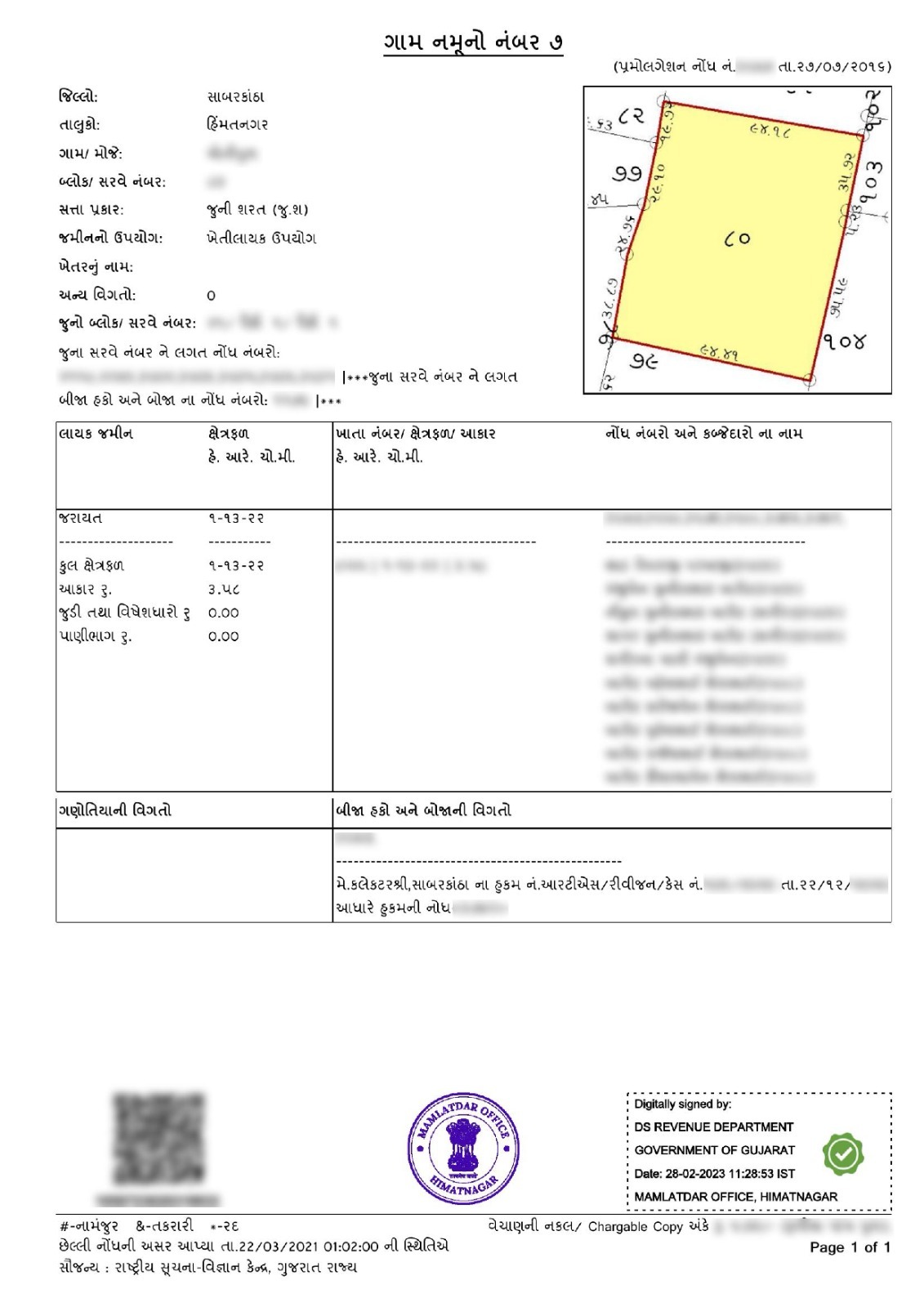
Gujarat 7/12
ગુજરાત 7/12 (સાત-બાર)
8A Utara (Khata)
Total village landholding per owner.
What is 8a utara?
8A is a summary of all land held by one person within a single village. While 7/12 tells you about a specific plot, 8A tells you about the person — listing every plot they own in that village. Think of it like a land holdings statement, similar to a bank statement listing all your accounts.
What details are in 8a utara?
Every plot owned by one person in a village — their complete landholding record, Khata number, and combined area.
- All survey numbers owned by one person in that village
- Total combined land area
- Khata (account) number assigned by the revenue department
- Land category for each plot
- Village-specific record only — other villages require a separate 8A
Used for
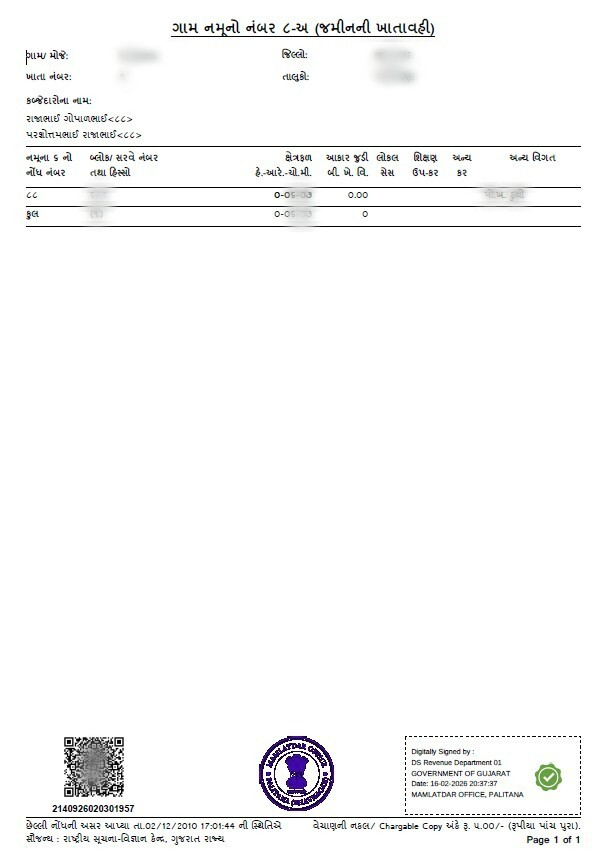
8A Utara (Khata)
ગામ નમૂના નં. ૮અ
Ferfar 6A (Current Mutation Entry)
Record of recent ownership change.
What is ferfar 6a?
Ferfar means change. Every time land changes hands — through a sale, gift, inheritance, or court order — the Talati (Village Revenue Officer) records it as a Ferfar entry. The current Ferfar 6A is the most recent such entry and confirms the ownership change has been officially acknowledged by the government.
What details are in ferfar 6a?
The specific record of the most recent ownership transfer — who gave, to whom, why, and whether it has been officially approved.
- Entry number and date of change
- Reason for transfer (sale, gift, inheritance, or court partition)
- Previous owner's name
- New owner's name
- Survey number involved in the change
- Whether the entry is approved or still pending
Used for
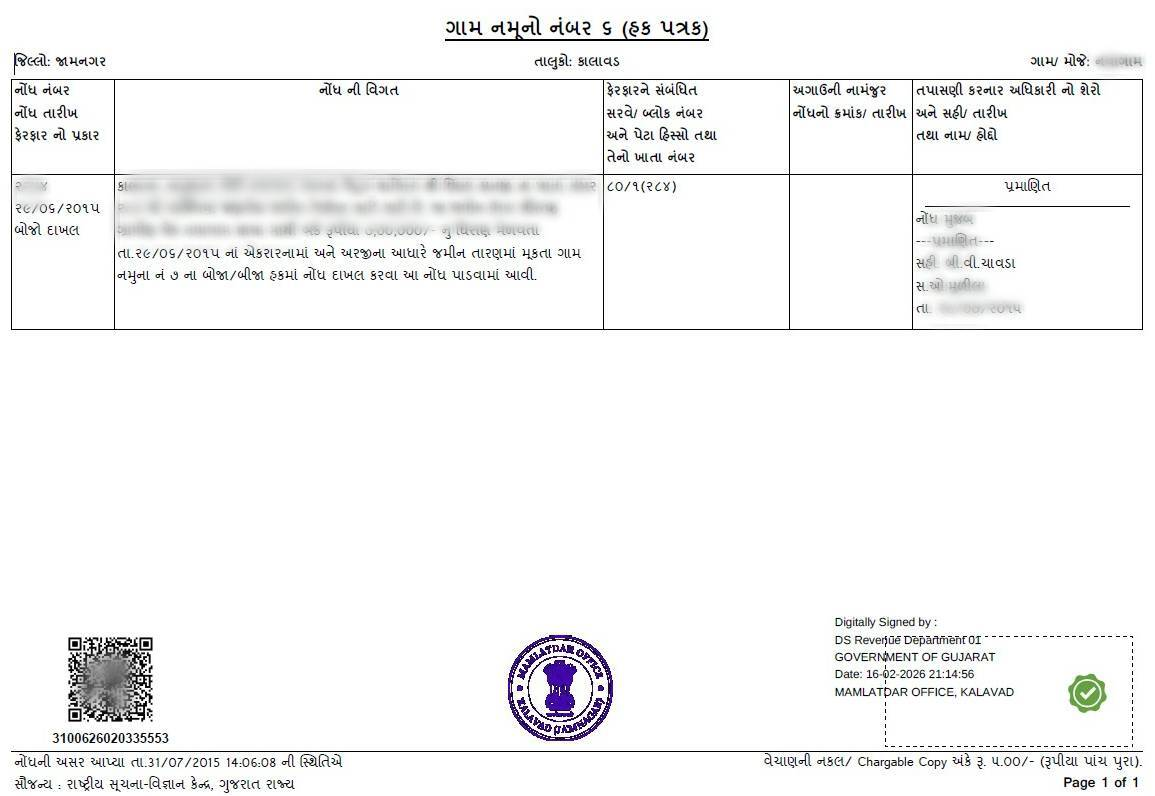
Ferfar 6A
ગામ નમૂના નંબર-૬(હક્કપત્રક)